
Session 0

In Session 0, we'll go over the campaign setting and talk about what we all do and don't want out of the game. If anyone is interested in poking around the DnD Beyond character creator beforehand is welcome to, but there's some handy stuff to know.
D&D just released a new Players Handbook with various updates, and I’d love to try it out if you're all down. No need to buy the book however—use the link above to create characters for “The Crown of the North,” campaign and you’ll automatically have access to my copy of the new rules online. You can either make a custom character or choose a premade one.
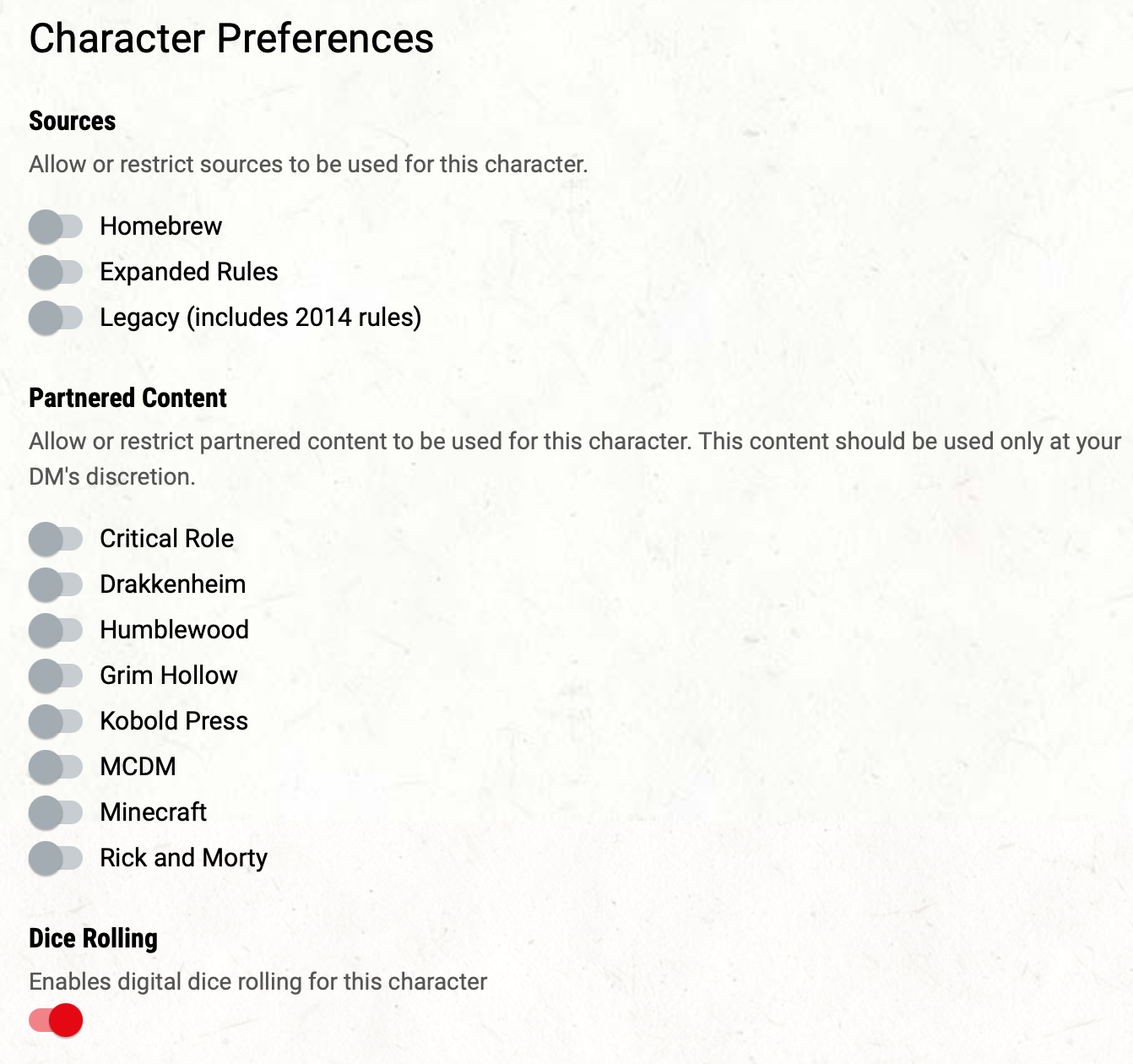
If you go custom, I recommend turning off the toggle switches on the first screen to avoid confusion like so:
Things to keep in mind
I’d love to run a DnD module set in the famous city of Waterdeep. If we go with this, here’s what you need to know for creating your character, organized by the steps in character creation.
Step 1: Class
- Any class can thrive in Waterdeep, though city-based classes like rogues and bards may feel especially at home. Wilderness classes, such as druids and rangers, can still flourish and may find the city to be an intriguing contrast to their usual environment.
- If you choose to play a ranger and need to pick a terrain, Mountain or Underdark are good options. For "Favored Enemies," Elf, Dwarf, Gnome, or Humans are recommended.
Step 2: Background
- Any background works in Waterdeep. If you’re unsure, consider Urchin, Soldier, Sailor, Noble, Entertainer, or Guild Artisan. If you choose Guild Artisan or Noble, I have lists of Waterdeep’s guilds and noble families you can pick from or you can make your own.
Step 3: Species
- Any species works in Waterdeep.
Step 4: Abilities
- When choosing your ability scores, please use "point buy" or "array" options.
- If you're looking for skills it's important to have in the campaign, at least some folks in the party should have
- Persuasion: To make good impressions.
- Investigation: To follow clues.
- Stealth: To hide from prying eyes.
- Perception: To notice hidden clues.
- Languages: Elvish, Gnomish, Dwarvish, Draconic, and Undercommon will likely be the most common.
- If you're looking for skills it's important to have in the campaign, at least some folks in the party should have
Step 5: Equipment
It gives you the option of going with default equipment or taking gold. If you go with gold all the equipment in the Player’s Handbook is available for purchase in Waterdeep at normal prices.
Step 4: Choose an Alignment
This is more flavor than something that has a mechanical impact. So go wild.
Step 5: Spells
- If your character can cast spells at first level you can choose spells to prepare. If you're not sure, here are some good options:
- Cantrips: Dancing Lights, Friends, Prestidigitation, Minor Illusion, Message, Mage Hand.
- 1st Level: Charm Person, Comprehend Languages, Detect Magic, Disguise Self, Identify, Sleep.
- 2nd Level: Darkvision, Detect Thoughts, Hold Person, Invisibility, Locate Object, Spider Climb, Suggestion.
All that said, it's good to keep this in mind:
The classic D&D party comprises a Cleric, Fighter, Rogue, and Wizard. Those four classes have the longest history in the game, but more importantly, they bring a balanced mix of capabilities to adventures. You’re welcome to use that party setup or modify it using these guidelines:
Cleric: Replace with Bard or Druid
Fighter: Replace with Barbarian, Monk, Paladin, or Ranger
Rogue: Replace with Bard or Ranger
Wizard: Replace with Bard, Sorcerer, or Warlock
So be ready to possibly switch things up if, you know, everyone chooses Rogue or something. See you all on Sunday!